
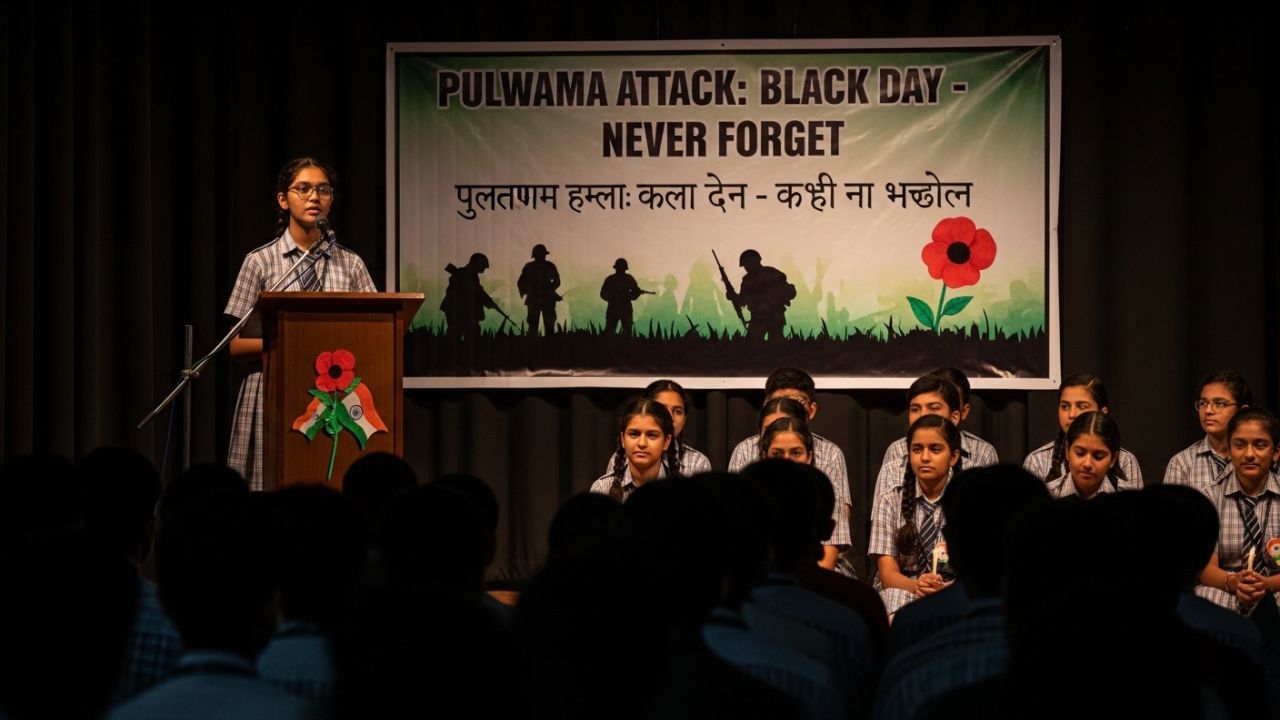

Every year on February 14, while the rest of the world celebrates Valentine's Day, India observes a solemn and painful anniversary — the 2019 Pulwama terror attack, the single deadliest assault on Indian security forces in modern history. This day is observed across the country as Pulwama Black Day.
On this date in 2019, a suicide bomber rammed an explosives-laden vehicle into a CRPF convoy in Pulwama, Jammu and Kashmir, killing 40 brave CRPF jawans. The nation wept. The nation mourned. And the nation vowed: never forget.
Table of Contents
What Is Black Day on February 14? — Pulwama Remembrance Day
Black Day on February 14 is observed across India as a national day of mourning, remembrance, and solidarity in honor of the CRPF soldiers killed in the 2019 Pulwama attack. Schools, government offices, and citizens pay tribute to the Pulwama martyrs by observing moments of silence, holding memorial events, and flying the national flag at half-mast.
The word "Black" refers to the color of grief — the conscious opposite of Valentine's Day celebrations. It is a reminder that February 14 is a day of deep sorrow for the families of 40 martyrs who will never come home again.
Pulwama Attack 2019 — Complete History & Background
To observe Pulwama Black Day 2026 meaningfully, understanding what happened on February 14, 2019 is essential. Here is a complete overview of the Pulwama terror attack — its timeline, the perpetrators, and India's historic response.
The Attack: What Happened on February 14, 2019?
On the afternoon of February 14, 2019, a massive convoy of 78 vehicles carrying approximately 2,500 CRPF personnel was traveling along the Jammu–Srinagar National Highway. The convoy was passing through Lethapora, Pulwama district, Jammu and Kashmir when a Maruti Eeco vehicle loaded with over 300 kg of RDX explosives was driven directly into one of the convoy buses at approximately 3:15 PM.
The explosion was catastrophic. The bus was completely obliterated. 40 CRPF jawans were killed — some instantly, others shortly after from critical injuries. In a matter of seconds, 40 families lost their heroes forever.
Who Was Responsible? — Jaish-e-Mohammed (JeM)
The Pakistan-based terrorist organization Jaish-e-Mohammed (JeM) claimed responsibility for the attack. The suicide bomber was identified as Adil Ahmad Dar, a 19-year-old from Pulwama who had joined JeM approximately one year before the attack. The National Investigation Agency (NIA) confirmed the attack was planned and directed by JeM operatives operating from Pakistani soil.
India's Response — Diplomatic Action and the Balakot Airstrike
India responded decisively on all fronts. Diplomatically, India revoked Pakistan's Most Favoured Nation (MFN) status, raised import duties on Pakistani goods to 200%, and launched an international campaign to isolate Pakistan globally.
On February 26, 2019 — just 12 days after Pulwama — the Indian Air Force launched the historic Balakot Airstrike, sending Mirage 2000 jets deep into Pakistani territory to destroy a major JeM training camp in Balakot, Khyber Pakhtunkhwa. It was the first Indian airstrike inside Pakistan since the 1971 war.
Wing Commander Abhinandan Varthaman engaged enemy aircraft in aerial combat, was captured briefly, and returned to India as a national hero. He was later honored with the Vir Chakra — India's third-highest wartime gallantry award.
Pulwama to Balakot — Complete Timeline
Remembering the 40 Pulwama Martyrs — CRPF Jawans Who Gave Their Lives
These brave men are the reason India observes Pulwama Black Day every February 14. They were sons, fathers, husbands, and brothers from every corner of India. Their names must never be forgotten:
The 40 Pulwama Martyrs — Amar Rahe
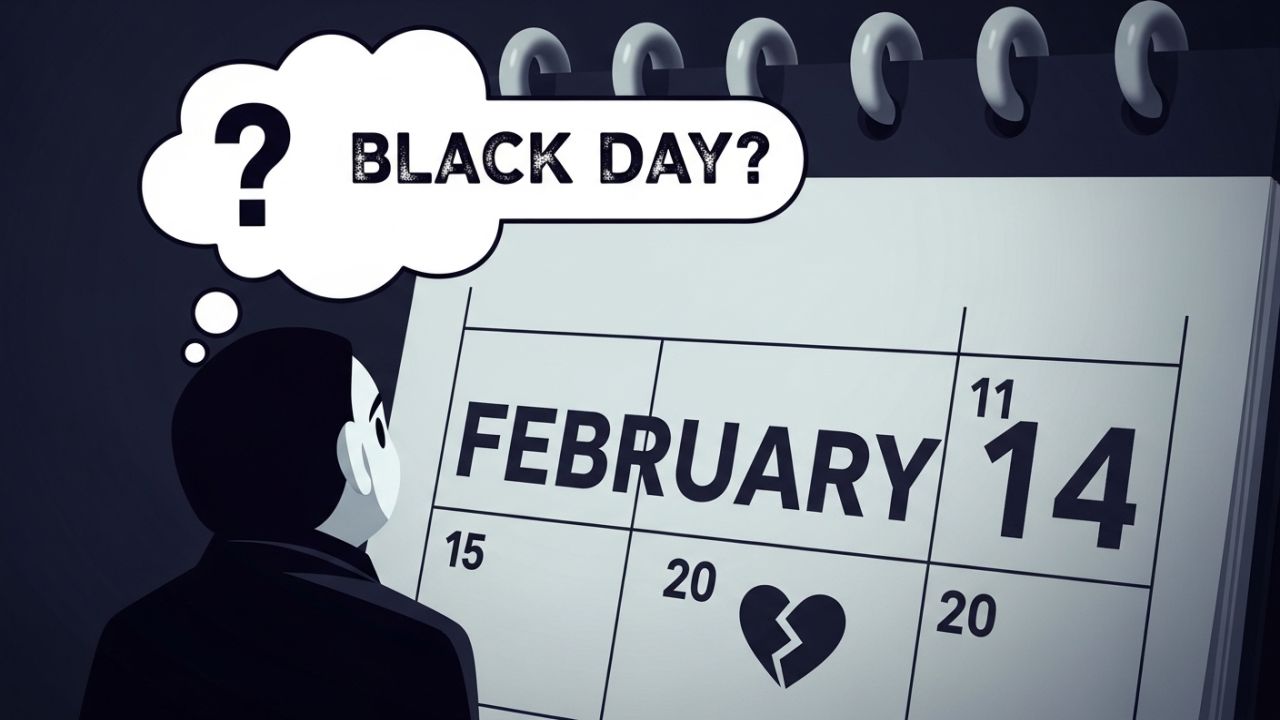
Pulwama Black Day School Assembly Speech 2026 — Full Script
Below is a complete, ready-to-deliver school assembly speech on Pulwama Black Day 2026. Approximately 750 words and suitable for students from Class 8 onwards. This is among the most searched February 14 Black Day speech in English for Indian schools.
Pulwama Black Day Speech for School Assembly
Respected Principal, Honorable Teachers, and my dear fellow students —
Today, February 14, is a day the world knows for many different reasons. It is Valentine's Day — a day of love, warmth, and celebration. But for every Indian who carries this nation in their heart, today is something else entirely.
Today is Black Day.
Today is the day we bow our heads, close our eyes, and remember forty men — forty sons, forty fathers, forty husbands, forty brothers — who gave their lives so that we could sit here in safety, in peace, and in freedom.
Seven years ago, on this very date — February 14, 2019 — in the cold winter afternoon of Pulwama in Jammu and Kashmir, the sound of an explosion shattered not just a convoy of vehicles, but the hearts of an entire nation.
A convoy of CRPF jawans was traveling from Jammu to Srinagar. These men had left their homes, their families, their children — to serve this country. They were not just soldiers. They were ordinary men with extraordinary courage. Some had recently gotten married. Some were new fathers who had seen their newborn babies only days before. Some had called home the night before, promising to visit soon.
None of them came home.
In a single moment — powered by hatred, cowardice, and terrorism — forty lives were taken. The terrorist organization Jaish-e-Mohammed, operating from Pakistani soil, had planted a suicide bomber. And in that terrible explosion, we lost forty of our finest sons.
My dear friends, I want to ask you something today. When you woke up this morning, did you feel safe? Were you worried about being attacked on your way to school? Were you afraid to step out of your home?
Most of us were not worried. Most of us were not afraid. And do you know why?
Because somewhere, on a cold mountain, on a dusty highway, on a difficult post far from home, a soldier is standing guard for us. Because men and women in uniform have made it their life's purpose to keep us safe.
The forty martyrs of Pulwama were exactly those men. They were our shield. And on February 14, 2019, they gave everything they had.
We must remember their names — not just today, but always. We must remember Jawan Maninder Singh Attri, months away from retirement. We must remember Constable Niraj Kumar Singh, who had a wedding waiting for him. We must remember every single name, every single family that was torn apart on that terrible afternoon.
India mourned. India wept. But India did not bow.
Twelve days after Pulwama, the Indian Air Force conducted the Balakot Airstrike — crossing into enemy territory and delivering a powerful message. Wing Commander Abhinandan Varthaman faced the enemy in the skies and showed the world the fearlessness of an Indian soldier. He returned as a hero.
But even as we celebrate that bravery, let us not forget the forty. Let us not allow time to blur their faces or silence their stories.
Today, as we observe Pulwama Black Day 2026, let us make a promise — not just words, but a true commitment from the heart.
Let us promise to respect our soldiers every single day. Let us promise to value the peace we live in, knowing the price paid for it. Let us promise to stand against hatred in all its forms. And let us promise to never forget Pulwama.
Black Day is not just a day of sadness. It is a day of determination — a day reminding us who we are as a nation: resilient, united, and deeply grateful.
Let us now take a moment of silence. In our hearts, we say: Thank you. We will not forget you. We are proud of you.
[ Moment of Silence ]
How to Deliver the Pulwama Black Day Speech — 6 Effective Tips
A powerful Pulwama Black Day speech for school assembly is only as effective as its delivery. Here are key tips for students and teachers presenting on February 14, 2026:
- 1Speak Slowly and With Feeling
This is a tribute, not a competition. Let every word carry weight. Rushing through a Black Day speech diminishes its emotional impact on the audience.
- 2Make Eye Contact With the Audience
Look up from your script frequently. A speech that connects through the eyes is far more powerful than one read mechanically from paper.
- 3Pause at Emotional Moments
After lines like "None of them came home" — pause deliberately. These silences give the audience time to absorb the gravity of the Pulwama tragedy.
- 4Wear Black as a Mark of Respect
On Pulwama Black Day, wear black clothing or a black armband. This visual element reinforces the solemnity of the occasion and shows solidarity.
- 5Practice at Least Twice Beforehand
Even the most powerful script falls flat without preparation. Practice in front of a mirror or with a family member before the school assembly.
- 6Open Strong to Command Attention
Starting with "Today is Black Day" immediately signals seriousness and commands the full attention of the assembly audience from the very first line.
How Schools Can Observe Pulwama Black Day 2026 — 5 Meaningful Activities
Indian schools can organize meaningful Black Day observances on February 14, 2026 beyond just a speech. Here are five recommended activities:
1. Martyrs Photo Display
A photo display of the 40 Pulwama martyrs in the school corridor or assembly hall makes the event real and personal. Seeing their young, uniformed faces is far more powerful than statistics alone.
2. Candle Lighting Ceremony
Forty candles — one for each martyr — arranged in a row create a deeply moving tribute. A candle lighting ceremony for Pulwama Black Day is among the most emotionally resonant school activities observed on February 14.
3. Documentary Screening and Classroom Discussion
A short documentary on the Pulwama attack and Balakot Airstrike, followed by classroom discussion, helps students engage critically with terrorism, national security, and patriotism in India.
4. Essay and Poster Competition
An essay competition on "The Sacrifice of Our Soldiers" or a poster competition on Pulwama Black Day encourages students to engage creatively and personally with national remembrance.
5. Collection Drive for Martyr Families
A collection drive for funds supporting CRPF martyr families teaches students that remembrance is most meaningful when combined with action and active citizenship.
Why Is It Important to Educate Students About Pulwama Black Day?
One of the greatest dangers of time is forgetfulness. As years pass, the memory of tragedies fades. New generations grow up without first-hand knowledge of events that shaped their nation. Schools carry an irreplaceable responsibility on February 14 Black Day.
The Pulwama attack is not just a historical event — it is a reminder of the ongoing challenge of cross-border terrorism that India faces. It is a lesson in the human cost of conflict and a testament to the courage of ordinary people who choose to serve their country over personal comfort and safety.
When students deliver speeches, observe silences, and light candles on February 14, they are keeping alive the memory of forty men whose families still grieve. They are honoring India's national commitment: we will not forget those who die in our service.
Observing Pulwama Black Day in school also teaches students to distinguish between love and hate, between sacrifice and selfishness — values that no textbook alone can instill.
Related Searches:
Carry the Flame of Remembrance Forward
As students, teachers, and citizens observe Pulwama Black Day 2026 on February 14, let school speeches ring out clearly. Let candles burn brightly. Let the names of the martyrs be spoken aloud in every classroom across India.
Use this speech. Adapt it. Make it your own. When you stand at that microphone, remember — you are not just delivering a script. You are fulfilling a national duty.
Jai Hind | Jai Jawan | Bharat Mata Ki Jai