
What Is an Anchoring Script, and Why Does It Matter?
An anchoring script is a written or semi-written guide that a host (or “anchor”) uses to conduct and connect all parts of an event. It includes welcome speeches, transition lines between segments, audience interactions, introductions of performers or speakers, and the closing remarks.
Think of the anchor as the thread that stitches together all the separate beads of a program. Without that thread, even the most polished performances feel disconnected.
Why a Good Anchoring Script Is Non-Negotiable
A well-prepared anchoring script matters for several reasons:
It keeps the event on track. Live events are unpredictable. A solid script gives the anchor a roadmap so that even if something goes off schedule, they can course-correct without the audience noticing.
It builds your confidence. Walking onto a stage without knowing what to say next is a recipe for stage fright. A script eliminates the fear of going blank.
It sets the tone. The anchor’s words establish whether the event feels formal, celebratory, energetic, or solemn. The right script for the right occasion makes all the difference.
It respects the audience’s time. Dead air — those awkward silent moments on stage — is the enemy of any event. A script ensures smooth transitions and keeps the audience engaged throughout.
It reflects on the institution. For school and college events especially, how the program is conducted reflects on the institution’s standards. A polished anchor creates a lasting positive impression on guests, parents, and faculty.
Also Read:- How to Write a Graduation Speech: Complete Guide with Template
Complete Ready-to-Use Anchoring Script Template for School/College Events
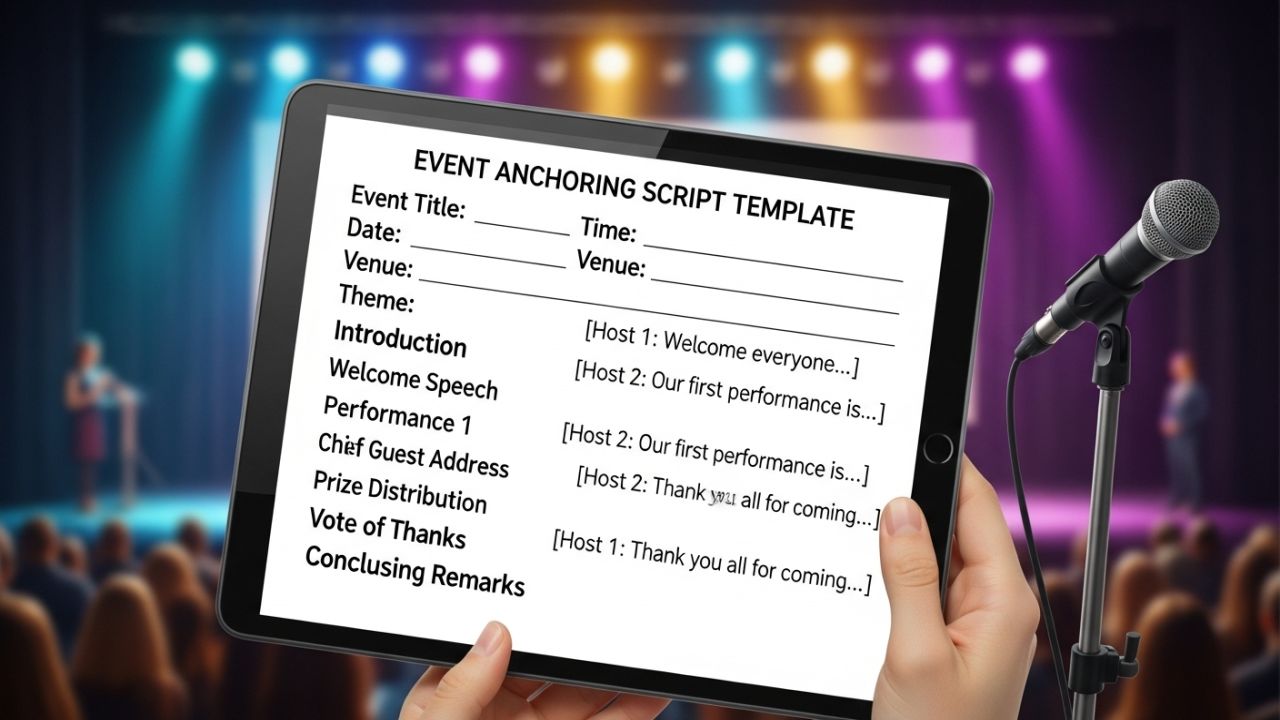
Below is a flexible anchoring script template you can adapt for Annual Day, Cultural Fest, Prize Distribution, or Fresher’s Welcome events. Customize the bracketed fields to suit your occasion.
╔══════════════════════════════════════════════════════════════════════╗
║         ANCHORING SCRIPT — [EVENT NAME] | [INSTITUTION NAME]         ║
╚══════════════════════════════════════════════════════════════════════╝

━━━━━━━━━━━━━━━━━━━━━━━━━━━━━━━━━━━━━━━━━━━━━━━━━━━━━━━━━━━━━━━━━━━━━
  OPENING / WELCOME
━━━━━━━━━━━━━━━━━━━━━━━━━━━━━━━━━━━━━━━━━━━━━━━━━━━━━━━━━━━━━━━━━━━━━

  [Walk on stage with confidence. Pause. Smile at the audience.]

  "Good [morning/evening], everyone!

  A very warm welcome to each and every one of you gathered here today
  for the [Event Name] of [Institution Name].

  I am [Your Name], and it is truly my honour and privilege to be your
  anchor for today's programme.

  We have a wonderful lineup ahead — filled with [talent/achievements/
  energy/celebration] — and I promise, you are in for an unforgettable
  experience.

  Before we begin, let us seek the blessings of the Almighty."

━━━━━━━━━━━━━━━━━━━━━━━━━━━━━━━━━━━━━━━━━━━━━━━━━━━━━━━━━━━━━━━━━━━━━
  LAMP LIGHTING / INAUGURAL CEREMONY
━━━━━━━━━━━━━━━━━━━━━━━━━━━━━━━━━━━━━━━━━━━━━━━━━━━━━━━━━━━━━━━━━━━━━

  "As the saying goes — a single lamp can illuminate an entire room.
  We now invite our esteemed dignitaries to light the lamp and
  officially inaugurate [Event Name].

  [Read out each dignitary's name and designation as they come forward.]

  Honourable [Designation], [Full Name]...

  [After lamp lighting:]

  What a beautiful beginning! The light before us today symbolises
  knowledge, hope, and the spirit of this magnificent institution."

━━━━━━━━━━━━━━━━━━━━━━━━━━━━━━━━━━━━━━━━━━━━━━━━━━━━━━━━━━━━━━━━━━━━━
  WELCOME ADDRESS / PRINCIPAL'S SPEECH
━━━━━━━━━━━━━━━━━━━━━━━━━━━━━━━━━━━━━━━━━━━━━━━━━━━━━━━━━━━━━━━━━━━━━

  "We now invite our respected Principal, [Principal's Name], to grace
  us with the welcome address. Ma'am/Sir, the floor is yours."

  [After the speech:]

  "Thank you so much, [Ma'am/Sir], for those inspiring words.
  Your vision continues to guide and motivate each one of us."

━━━━━━━━━━━━━━━━━━━━━━━━━━━━━━━━━━━━━━━━━━━━━━━━━━━━━━━━━━━━━━━━━━━━━
  CULTURAL PERFORMANCE #1 INTRODUCTION
━━━━━━━━━━━━━━━━━━━━━━━━━━━━━━━━━━━━━━━━━━━━━━━━━━━━━━━━━━━━━━━━━━━━━

  "And now, ladies and gentlemen, it is time for our first performance
  of the evening!

  [Quote or interesting fact related to the art form, e.g.:]
  'Dance is the hidden language of the soul.' — Martha Graham

  Please put your hands together and welcome [Performer/Group Name]
  as they present [Performance Name/Type]!"

  [After the performance:]

  "Wasn't that absolutely spectacular? A huge round of applause for
  [Performer/Group Name] — you truly brought the stage to life!"

━━━━━━━━━━━━━━━━━━━━━━━━━━━━━━━━━━━━━━━━━━━━━━━━━━━━━━━━━━━━━━━━━━━━━
  [REPEAT TRANSITION BLOCK FOR EACH PERFORMANCE / SEGMENT]
━━━━━━━━━━━━━━━━━━━━━━━━━━━━━━━━━━━━━━━━━━━━━━━━━━━━━━━━━━━━━━━━━━━━━

  "Before we move forward, let me take a moment to thank everyone
  who has worked tirelessly behind the scenes to make today possible —
  the teachers, the organizing committee, and every single student
  who has poured their heart into this event."

━━━━━━━━━━━━━━━━━━━━━━━━━━━━━━━━━━━━━━━━━━━━━━━━━━━━━━━━━━━━━━━━━━━━━
  PRIZE / AWARD DISTRIBUTION (if applicable)
━━━━━━━━━━━━━━━━━━━━━━━━━━━━━━━━━━━━━━━━━━━━━━━━━━━━━━━━━━━━━━━━━━━━━

  "Every achievement begins with the decision to try.
  And today, we honour those who tried — and triumphed.

  We now move to the prize distribution ceremony. I request
  [Dignitary Name] to kindly come forward to felicitate our winners.

  [Announce each winner clearly: Name | Class/Department | Award Name]

  Congratulations to all our winners! You make us incredibly proud."

━━━━━━━━━━━━━━━━━━━━━━━━━━━━━━━━━━━━━━━━━━━━━━━━━━━━━━━━━━━━━━━━━━━━━
  VOTE OF THANKS
━━━━━━━━━━━━━━━━━━━━━━━━━━━━━━━━━━━━━━━━━━━━━━━━━━━━━━━━━━━━━━━━━━━━━

  "We now invite [Student Council President / Teacher's Name] to
  deliver the Vote of Thanks."

  [After Vote of Thanks:]

  "Thank you. Those words captured exactly what today has meant to all
  of us."

━━━━━━━━━━━━━━━━━━━━━━━━━━━━━━━━━━━━━━━━━━━━━━━━━━━━━━━━━━━━━━━━━━━━━
  CLOSING REMARKS
━━━━━━━━━━━━━━━━━━━━━━━━━━━━━━━━━━━━━━━━━━━━━━━━━━━━━━━━━━━━━━━━━━━━━

  "And with that, we come to the end of a truly memorable [Event Name].

  They say all good things must come to an end — but the memories
  we've created together today will last a lifetime.

  On behalf of [Institution Name], I thank each one of you —
  our honoured guests, our dedicated faculty, our spirited students,
  and our wonderful audience — for making today a resounding success.

  Do travel safely, and we hope to see you again very soon.

  Goodnight / Good afternoon, and God bless!"

  [Walk off stage confidently. Smile and give a slight bow.]

╚══════════════════════════════════════════════════════════════════════╝
Pro Tip: Print this script in a font size of at least 14pt. Highlight your cue lines (lines you deliver right after someone finishes speaking) in a different colour so you can pick up instantly even if your attention wanders.
Also Read:- February 14 Black Day: Remembering the Pulwama Attack — India’s Darkest Valentine’s Day
Key Tips for Confident Delivery on Stage
Knowing your script is only half the battle. How you deliver it determines whether the audience leans in — or zones out. Here are the most effective techniques:
1. Master the Pause
Silence is your most underused tool. A deliberate 2–3 second pause before or after an important line gives the audience time to absorb your words and signals that what you’re saying matters. Most beginners rush through their lines to escape the discomfort of silence — do the opposite.
2. Maintain Eye Contact
Don’t bury your face in your script. Divide the audience into three zones — left, centre, right — and make it a habit to scan all three zones as you speak. Eye contact creates a personal connection and projects confidence even when you’re nervous.
3. Control Your Pace
Nervousness causes people to speak too fast. Practice reading your script at 70% of your natural conversational speed. It will feel slow to you on stage, but it will sound perfectly clear to the audience.
4. Use Your Voice Dynamically
Vary your volume, pitch, and tone for different moments. Announce performances with energy and excitement. Introduce dignitaries with warmth and formality. Deliver the closing with calm sincerity. A monotonous delivery, no matter how well-written the script, will lose the audience.
5. Own Your Mistakes
If you stumble or lose your place, don’t panic or over-apologise. Take a breath, smile, and continue. The audience is almost always more forgiving than you expect. Projecting calm confidence after a slip is far more impressive than perfect delivery anyway.
6. Arrive Early and Walk the Stage
Familiarity removes fear. Get to the venue at least an hour early. Stand on stage, speak into the microphone, and get comfortable with the space. Knowing where you’re standing reduces 80% of on-stage jitters.
Common Anchoring Mistakes to Avoid
Even experienced anchors fall into these traps. Being aware of them puts you miles ahead:
Reading directly from the script without looking up. This instantly kills your connection with the audience and makes you appear unprepared, even if you’re not.
Saying “um,” “uh,” or “so” between transitions. These filler words are a sign of poor preparation. Replace them with a deliberate pause.
Mispronouncing the names of dignitaries or performers. This is embarrassing for everyone. Always confirm pronunciations before the event, especially for names you’re unfamiliar with.
Going off-script without preparation. Improvised jokes or remarks that haven’t been thought through often fall flat or, worse, offend someone. If you want to add personal touches, script them too.
Ignoring the event schedule. A good anchor is always aware of the clock. If a performance is running long, don’t add lengthy transitions. Read the room and adapt.
Not modulating your voice for the microphone. Shouting into a mic, or speaking too softly, ruins the experience. Practice mic technique — speak across the mic, not directly into it, and maintain a consistent distance.
Forgetting to acknowledge technical glitches gracefully. If there’s a sound issue or a delay, the anchor must fill that gap calmly and professionally — not stand frozen or show frustration.
Also Read:- Best Pulwama Attack Black Day Speech for School Students (February 14, 2026) — Full Script + Guide
Frequently Asked Questions (FAQ)
What should I say at the beginning of an anchoring script?
Start with a greeting that matches the time of day, a warm welcome to the audience, a brief introduction of yourself, and an exciting teaser of what’s to come. Avoid starting with lengthy self-praise — get to the celebration quickly.
How do I write a good anchoring script for a school event?
Begin by listing every segment of the programme in order. Write one opening line, one closing/transitional line, and one interesting fact or quote for each segment. Keep your language simple, warm, and inclusive. Add relevant quotes or trivia to make transitions interesting rather than mechanical.
How long should an anchoring script be?
The script itself shouldn’t be too long — an effective anchor speaks for roughly 5–10% of the total event time. For a 2-hour event, that’s approximately 6–12 minutes of total anchor time, spread across the programme.
Can I use humour in my anchoring script?
Absolutely — but use it wisely. Light, inclusive humour that doesn’t target individuals or groups works well for most school and college events. Avoid anything that could be perceived as sarcastic or insensitive, especially in the presence of senior faculty or guest dignitaries.
What is the difference between an anchor and an emcee?
The terms are often used interchangeably, but an anchor typically refers to the host at institutional events (schools, colleges, corporate functions), while an emcee (Master of Ceremonies) is more common in entertainment or commercial events. The role is essentially the same — to introduce, connect, and close segments of a programme.
How do I deal with stage fright while anchoring?
Preparation is the best remedy. The more thoroughly you know your script, the less you’ll rely on adrenaline to get through it. Additionally, take three deep diaphragmatic breaths before walking on stage, focus on the audience rather than your own anxiety, and remind yourself that the crowd wants you to succeed.
What if there is an unplanned gap or technical issue during the event?
This is where your preparation pays off. Always have two or three “filler” lines ready — an interesting quote, a fun fact about the occasion, or a light audience interaction like asking people to guess a trivia question. These bridges turn awkward gaps into engaging moments.
Final Thoughts + Your Next Step
A great anchoring script is not just a list of lines to recite — it’s a carefully crafted experience designed to make every person in that audience feel included, engaged, and glad they showed up. The best anchors are not necessarily the ones with the most natural talent; they’re the ones who prepare the most diligently and deliver with genuine warmth.
Use the template above as your foundation, personalise it for your event, and rehearse it until the words feel like your own. The stage is waiting